Slow Down to Feel Better: The Surprising Power of the Lebanese Way of Eating

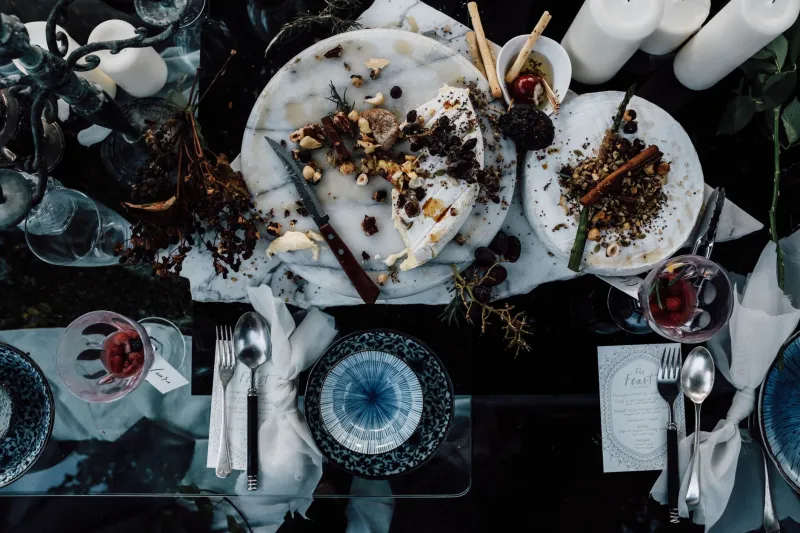
Photo by Photo by Vincent Yap on Unsplash on Unsplash
Let's be honest. Most of us eat lunch at our desks. We scroll through our phones between bites at dinner. We grab breakfast from a drive-through and consider it a win if we actually chew. Speed has become the default setting of American food culture, and most of us are too busy to notice how much it's costing us.
Then you sit down at a Lebanese table — and something shifts.
The food arrives in waves. There's no single entrée moment, no rush to clear the plates, no awkward glance at the check. There's hummus, then fattoush, then a platter of grilled meat, then more bread, then maybe something sweet and a tiny cup of coffee that demands you stop and actually taste it. The meal stretches. The conversation deepens. Time, somehow, feels like it belongs to you again.
That's not an accident. It's a philosophy.
The Prep Work Is Part of the Point
If you've ever cooked Lebanese food from scratch, you already know it doesn't exactly fit into a 30-minute weeknight window. Dried chickpeas need an overnight soak before they become hummus. Kibbeh is kneaded by hand. Slow-roasted lamb falls off the bone only after hours in the oven. Tabbouleh is chopped so finely it takes patience, not just a knife.
For a lot of American home cooks, that kind of time investment can feel like a barrier. But Lebanese cooks — and the grandmothers who taught them — would tell you the prep is the cooking. It's not a chore you endure before the real thing starts. Soaking those chickpeas, grinding your own spices, marinating meat the night before — each step builds flavor and, maybe more importantly, builds intention.
There's actually something happening in your brain when you slow down and work with your hands. Repetitive, focused tasks like chopping, kneading, or stirring are known to activate a kind of meditative state — lowering cortisol levels and helping your nervous system shift out of fight-or-flight mode. Lebanese cooking, with its hands-on techniques and unhurried rhythms, essentially turns dinner prep into a stress-relief practice. You just have to be willing to start the night before.
The Mezze Table as a Time Machine
Here's what a Lebanese meal structure does that a typical American dinner doesn't: it removes the finish line.
When you sit down to a mezze spread — a dozen small plates arranged across a table with no particular order of operations — you're not working toward a conclusion. You're just... eating. Talking. Reaching for something. Trying a little of this and then a little of that. The meal has no climax, which means it also has no urgency.
This might sound inefficient. And in strictly caloric terms, sure, you could argue that. But research on digestive health tells a different story. Eating slowly and in a relaxed state allows your body to properly trigger the enzymes and acids it needs for digestion. It gives your brain time to register fullness before you've overeaten. It reduces bloating, improves nutrient absorption, and generally makes your gut a happier place to live.
Lebanese dining also tends to be inherently plant-forward — lentils, chickpeas, fresh herbs, olive oil, vegetables roasted or raw — which means the food itself supports digestion. But the pace of eating it matters just as much as what's on the plate.
Rebellion in the Form of a Shared Plate
There's something almost countercultural about insisting on a long, unhurried meal in 2024 America. Hustle culture has convinced us that busyness is a badge of honor, that rest is laziness, and that efficiency is the highest virtue. Against that backdrop, a three-hour Sunday lunch feels almost subversive.
Lebanese families have been doing it for generations — not as a protest, but simply because that's how meals work. The table is where you catch up, where arguments get quietly resolved, where kids hear stories about where the family came from, where grandparents stay connected to the people who love them. Food is the excuse to gather, but connection is the actual meal.
For Lebanese-Americans navigating life in the U.S., that tradition often becomes a lifeline. Amid the churn of American professional life, the Sunday table — or the holiday spread, or the impromptu weeknight dinner that turns into a two-hour hang — is a place where a different set of values gets to win. Slowness wins. Generosity wins. Presence wins.
And increasingly, non-Lebanese Americans are finding their way to that table too.
What Happens When You Actually Sit There
If you've never hosted or attended a proper Lebanese meal, here's what to expect: you will feel, at some point during the evening, a particular kind of calm that's hard to name. It's not just fullness. It's not just the good company. It's something about the accumulated effect of having taken your time — with the food, with the people, with the act of being somewhere without needing to be somewhere else.
Mental health researchers call this kind of experience "restorative" — meaning it actively replenishes the cognitive and emotional resources that daily stress depletes. Shared meals, particularly long ones with people you care about, have been shown to reduce loneliness, improve mood, and even strengthen immune function. The Lebanese table, with its built-in invitation to linger, is basically a wellness practice disguised as dinner.
None of this requires you to be Lebanese to access it. You just have to be willing to slow down.
Start Small, Go Slow
You don't have to pull off a full mezze spread on your first try. Start by soaking dried chickpeas instead of opening a can — just to see what it feels like to plan a meal a day in advance. Make a batch of tabbouleh and taste as you go, adjusting the lemon and olive oil until it feels right. Invite a couple of friends over and put everything on the table at once instead of serving courses in sequence.
See what happens to the conversation. See what happens to the evening.
The Lebanese way of eating isn't a trend or a diet or a wellness hack. It's an old, joyful, deeply human insistence that food deserves time and people deserve each other. In a culture that keeps telling us to speed up, that might be the most radical thing on the table.