Thirty Days at the Lebanese Table: What Happens When You Stop Eating Like It's a Chore

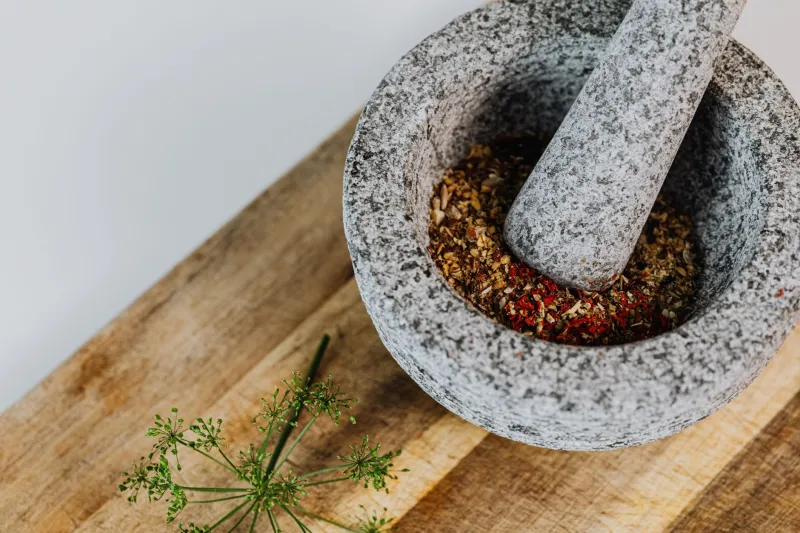
Photo: Nick Smith, CC BY-SA 2.0, via Wikimedia Commons
I want to tell you this experiment was elegant. It wasn't. But thirty days of eating the way a Lebanese grandmother would — long meals, small dishes, seasonal produce, and absolutely no eating alone if I could help it — rearranged something in me that no diet ever has.
Here's how it went, honestly, including the parts where it fell apart.
The Rules I Gave Myself
Nothing extreme. No calorie counting, no forbidden foods. Just four habits:
- Meals lasted at least 30 minutes whenever possible
- Eat mezze-style — several small dishes instead of one big plate
- Cook with what's in season, mostly vegetables
- Never eat alone if there's a human available to join me
That's it. Sitto's rules, more or less.
Week One: The Discomfort of Sitting Still
The first thing I noticed was how restless I was. My default American meal takes eleven minutes, standing at the counter, phone in hand. Suddenly I was expected to linger? By day three I caught myself finishing my plate and reaching to clear the table — and my husband looking at me like, who are you?
But something shifted around day five. Slowing down meant I actually tasted the food. The lemon in the tabbouleh. The smoked depth of freekeh. I'd been speed-eating good ingredients for years without noticing them.
Week Two: My Stomach Had Opinions — Good Ones
I'll spare you the graphic details, but let's just say a month of olive oil, legumes, whole grains, and yogurt does things to your digestion that I can only describe as reorganized. Bloating I'd accepted as normal for a decade mostly vanished. So did the 3 p.m. crash, because mezze-style eating meant my blood sugar stopped riding a rollercoaster.
The science backs this up — fiber, healthy fats, fermented dairy — but honestly, the felt experience was more convincing than any study.
Week Three: The Part I Didn't Expect
Here's what surprised me most: cooking with company changed my family's dynamics. When my teenage daughter and I made warak enab (stuffed grape leaves) together, we talked for two hours. Not about anything deep — just talking. Rolling little leaves apparently unlocks conversation in a way that driving to soccer practice never has.
I started inviting people over without cleaning the whole house first, because Lebanese hosting culture simply doesn't care about your baseboards. My friendships got easier. That's not a food benefit, exactly, but it's the one I'd keep if I could only choose one.
Week Four: The Honest Setbacks
Full transparency: I blew it several times. A Tuesday of drive-thru fries. A solo lunch of sad desk cereal. One night I microwaved a frozen burrito and ate it in the car, which felt like the culinary equivalent of skipping church.
And the time cost is real. Mezze-style cooking means washing more dishes. Long meals mean long evenings. On my busiest workday, the whole framework collapsed, and I realized Lebanese grandmothers have something I don't: decades of practice and, often, another pair of hands in the kitchen.
What American Convenience Culture Gets Wrong
Here's my biggest takeaway. We've optimized food for efficiency — fast, portable, hands-free, solo. And in doing so, we've deleted the very things that make eating nourishing: slowness, company, and attention.
Lebanese food culture treats the meal as the point, not the interruption. Convenience isn't the enemy — but convenience as the default is quietly expensive. It costs us digestion, connection, and honestly, pleasure.
Am I Keeping It Up?
A month later, here's what stuck: we eat dinner at the table most nights, with actual chairs and actual conversation. Sunday is a mezze afternoon. I keep labneh and sumac on hand like they're toothpaste. The long, slow, everyone-stays-a-while rhythm — that's mine now.
Did I eat like a Lebanese grandmother for thirty days? Sort of. But I think she'd say I finally learned to stay at the table. That's the part worth keeping.