More Is More: How the Lebanese Table Rewired My Family's Relationship With Food
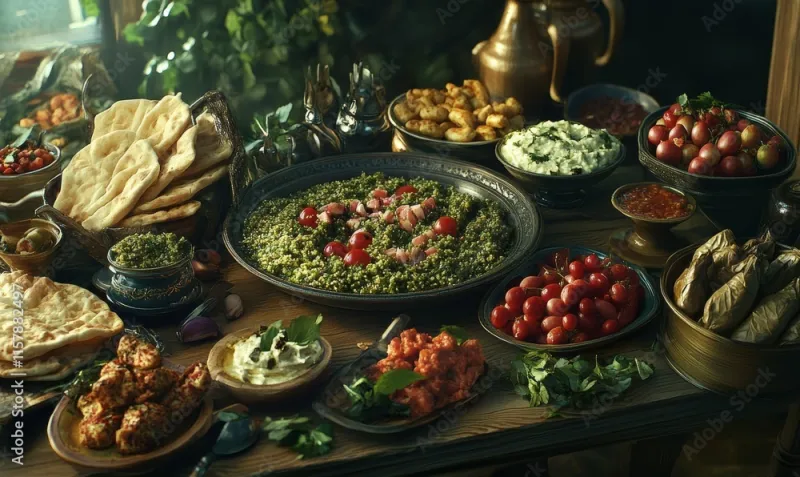
Photo: Lebanese mezze spread abundant table family gathering, via as1.ftcdn.net
There's a moment that happens at almost every Lebanese gathering. The food is already on the table — hummus, tabbouleh, kibbeh, fattoush, a whole roasted chicken — and then someone walks out of the kitchen carrying another platter. Guests laugh, groan a little, maybe protest. And then they reach for it anyway.
That moment isn't accidental. It's a deeply intentional expression of something Lebanese culture has understood for generations: feeding people generously is one of the most direct ways to show them they matter.
For Lebanese-American families navigating life in the US, that philosophy doesn't always translate smoothly into a food culture that's become increasingly obsessed with portion control, calorie counting, and the idea that restraint equals virtue. But more and more people — Lebanese and non-Lebanese alike — are starting to push back.
The Table as a Love Language
Nadia Haddad grew up in Dearborn, Michigan, the daughter of Lebanese immigrants who arrived in the US in the late 1980s. She remembers Sunday lunches at her grandmother's house as near-theatrical events. "There was never a question of whether there'd be enough food," she says. "The question was always where we were going to put it all."
For Nadia, that abundance wasn't just about generosity in the abstract. It was a message. "When my teta cooked for you, she was saying: you are worth this effort. The overflowing table was proof."
That's a sentiment echoed by food anthropologists who study Middle Eastern hospitality traditions. In Lebanese culture, the concept of karam — generosity — is one of the highest social virtues. Offering food abundantly to guests isn't showing off. It's fulfilling a cultural obligation, a way of honoring the people in your home.
Compare that to the dominant American food narrative, which tends to frame abundance with suspicion. Oversized portions get framed as a problem. Leftovers are either a budget hack or a source of guilt. There's a quiet but persistent cultural message that wanting more — of anything, including food — is somehow a moral failing.
Lebanah Azzi, a food blogger based in Los Angeles who documents her Lebanese-American cooking life, puts it plainly: "I spent years apologizing for how much food I made. I'd have people over and say, 'Sorry, I went a little overboard.' And then I realized — why am I apologizing? This is how I was raised to love people."
What 'Enough' Actually Means
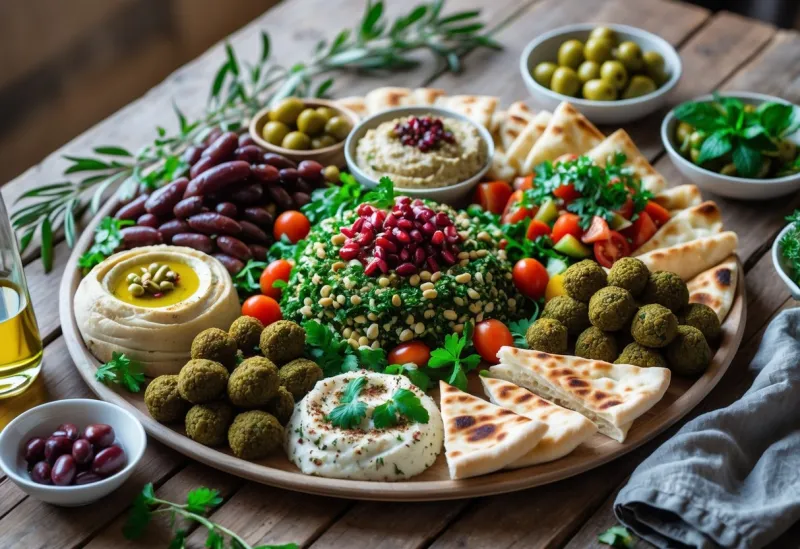
The Lebanese mezze tradition is probably the clearest expression of this abundance philosophy in action. Rather than a single entrée with sides, mezze is a sprawling collection of small dishes that arrive together — or in waves — meant to be shared, sampled, and revisited throughout the meal. There's no single focal point. There's no "main course" that everyone has to wait for. There's just food, in abundance, available to everyone at the table.
This structure does something interesting to the social dynamics of a meal. When there's plenty, the pressure around eating lifts. Nobody's watching how much you take. Nobody's calculating whether there'll be enough for seconds. The conversation flows more easily because the food is already handled — it's just there, generous and unhurried.
Rami Khoury, a chef and Lebanese cooking instructor in Brooklyn, has noticed this effect firsthand in his cooking classes. "When I teach mezze-style eating to American students, the thing they always comment on isn't the food itself — it's how relaxed they feel. There's something about abundance that tells your nervous system: you're safe here."
That psychological dimension is real. Research in food psychology suggests that scarcity mindset — the sense that there may not be enough — activates stress responses that can make eating feel anxious rather than pleasurable. An abundant table, by contrast, creates the conditions for actual enjoyment.
Bringing It Home: Practical Ways to Embrace the Abundance Mindset
You don't have to throw a full Lebanese feast every weekend to absorb some of this philosophy. Here are a few low-key ways to start shifting the energy at your own table:
Make one more dish than you think you need. Seriously, just one. A simple bowl of olives, a plate of sliced vegetables with olive oil and za'atar, a extra portion of rice. The goal isn't extravagance — it's the feeling of plenty.
Stop pre-plating. Bring dishes to the table family-style and let people serve themselves. This single change shifts the meal from a transaction (here is your allocated portion) to an experience (help yourself, take more, this is for all of us).
Reframe leftovers as abundance carried forward. In Lebanese households, leftovers aren't a consolation prize — they're tomorrow's lunch, the base of a new dish, proof that you cooked with generosity. Fatteh is literally built on day-old bread. Nothing is wasted; everything is transformed.
Invite one more person. Lebanese hospitality operates on the assumption that there's always room for one more. The table expands. The food stretches. The welcome is genuine. Try it once and notice what it does to the energy of your gathering.
The Deeper Shift
For Nadia Haddad, fully embracing her family's food culture meant letting go of a lot of internalized shame around eating abundantly. "I had to unlearn the idea that making a lot of food was somehow indulgent or irresponsible," she says. "Now I see it as an act of care. I make too much on purpose. I send people home with containers. That's the whole point."
Lebanah Azzi has stopped apologizing entirely. "My table is full because my heart is full," she says. "If you come to my house and leave hungry, that's on me. But that's never happened yet."
The Lebanese table doesn't ask you to eat more than you want. It just makes sure you never have to worry about whether there's enough. And in a culture that's spent decades tangled up in complicated feelings about food, that simple, generous reassurance might be exactly what the dinner table needs.