Sitto's Kitchen: How Lebanese Grandmothers Are Passing Down Recipes One Generation at a Time
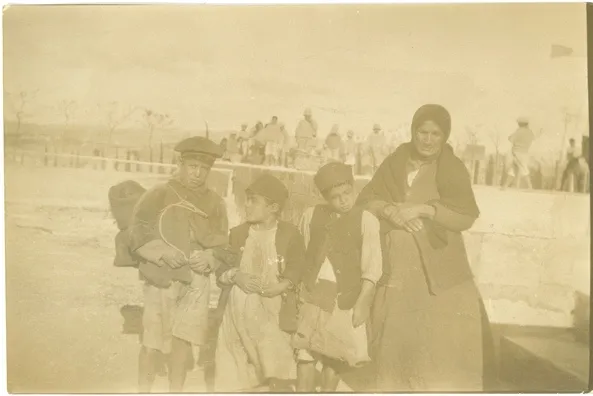
Photo: Mennonite Church USA Archives, No restrictions, via Wikimedia Commons
There's a particular kind of magic that lives in a Lebanese grandmother's kitchen. It smells like toasted pine nuts and rose water. It sounds like the low hum of Arabic radio and the rhythmic slap of dough against a floured board. And lately, it also sounds like the soft chime of a phone camera — because Gen Z is showing up, apron on, ready to learn.
Across Lebanese-American households from Dearborn, Michigan to Los Angeles, California, a quiet culinary revival is underway. Young people who grew up eating their sitto's (grandmother's) food but never really learned to make it are pulling up a stool, asking questions, and — yes — filming the whole thing. And the grandmothers? They couldn't be happier about it.
The Kitchen as a Classroom
For many Lebanese families, recipes were never written down. They lived in muscle memory. A pinch of this, a handful of that, cook it until it smells right. That worked beautifully for generations — until the family scattered across zip codes and the kitchen visits became less frequent.
That's exactly what happened to Maya, a 23-year-old nursing student in suburban Detroit. Growing up, she'd watch her grandmother, Teta Georgette, roll grape leaves with breathtaking speed. But she never tried it herself. It wasn't until the pandemic, when she suddenly had nowhere to be and her grandmother was just a few miles away, that she finally asked for a lesson.
"The first time I rolled them, they fell apart," Maya laughs. "Teta just shook her head and did it again, slower this time, narrating every step. By the third hour, I was actually getting it. And she was so proud — like, visibly emotional."
That emotional charge is something you hear over and over in these stories. For the grandmothers, teaching a grandchild to cook isn't just practical. It's an act of legacy-building. It's saying: this is who we are, and now you carry it too.
Why Gen Z Is Leaning In
It might seem surprising that a generation raised on DoorDash and TikTok recipe hacks would want to spend an afternoon learning to make kibbeh by hand. But the trend makes a lot of sense when you look closer.
Young Lebanese-Americans are navigating a dual identity that's always been a little complicated. They're American, yes — but there's something in the food that pulls them back to a place they may have never even visited. A bowl of lentil soup tastes like a phone call from Beirut. A plate of fattoush carries the memory of every summer gathering.
For many, cooking these dishes is a way to access heritage that might otherwise feel abstract. You can't always speak the language fluently. You might not know all the history. But you can learn to make your grandmother's hummus exactly the way she does — with the right amount of lemon, the good olive oil, and the patience to really let the tahini come together.
Social media has also played a surprising role in this reconnection. Platforms like TikTok and Instagram are full of Lebanese-American creators sharing cooking videos with their grandparents, and these clips routinely go viral. There's something universally moving about watching a 70-year-old woman guide her grandchild's hands through a recipe she's made a thousand times. Comments flood in from people of every background saying the same thing: this made me want to call my grandmother.
The Recipes That Are Getting Passed Down
So what's actually being taught in these kitchens? A lot of the classics, it turns out — but with personal family twists that make each version distinct.
Kibbeh is a big one. That iconic Lebanese dish of ground lamb mixed with bulgur wheat and spices is a rite of passage in many families. Making it by hand — shaping the little footballs, stuffing them just so — is considered a real skill, and grandmothers take pride in teaching it properly.
Then there's the bread. Lebanese flatbread, baked directly on a saj (a domed griddle), is something you can't really replicate from a store-bought version. Learning to stretch the dough thin enough, to feel when it's ready — that knowledge only comes from standing next to someone who's done it hundreds of times.
Sweets are another popular lesson. Mamoul cookies, those buttery semolina pastries filled with dates or walnuts and pressed into intricate molds, are a staple around holidays. Learning to make them is almost like learning a family handshake — the mold patterns, the filling ratios, the exact texture of the dough are all deeply personal to each family.
What Gets Lost, What Gets Kept
Here's the honest part: not everything survives the translation perfectly, and that's okay.
Some grandmothers use ingredients that aren't easy to find in American grocery stores. Some techniques require equipment that younger cooks don't have. And some recipes are so intuitive — so dependent on feel and smell and experience — that even the most enthusiastic student can't fully replicate them on the first try, or the tenth.
But what does survive is something more important than a perfect recipe: the spirit of the dish. The understanding of why Lebanese food is made the way it is — with generosity, with patience, with the expectation that it will be shared. Those values are absolutely transferable, and they're what make the food meaningful rather than just technically correct.
Maya puts it well: "My grape leaves will probably never taste exactly like Teta's. But when I make them now, I think about her the whole time. And when I serve them to my friends, I tell them the story. That feels like enough."
Keeping the Table Set for Everyone
At Happy Bites LB, this is exactly the kind of story we live for — because Lebanese food has always been about more than what's on the plate. It's about connection, continuity, and the particular joy of feeding people you love.
If you have a sitto, a teta, a nana, or any elder in your life who carries these recipes in their hands, now is a great time to ask for a lesson. Bring your phone if you want — the grandmothers are getting used to it. Bring your appetite, definitely. And bring a willingness to make a mess and try again.
Because the best recipes aren't the ones that are perfectly preserved. They're the ones that keep getting made.