Small Cup, Big Welcome: What Lebanese Coffee Can Teach You About the Soul of the Cuisine
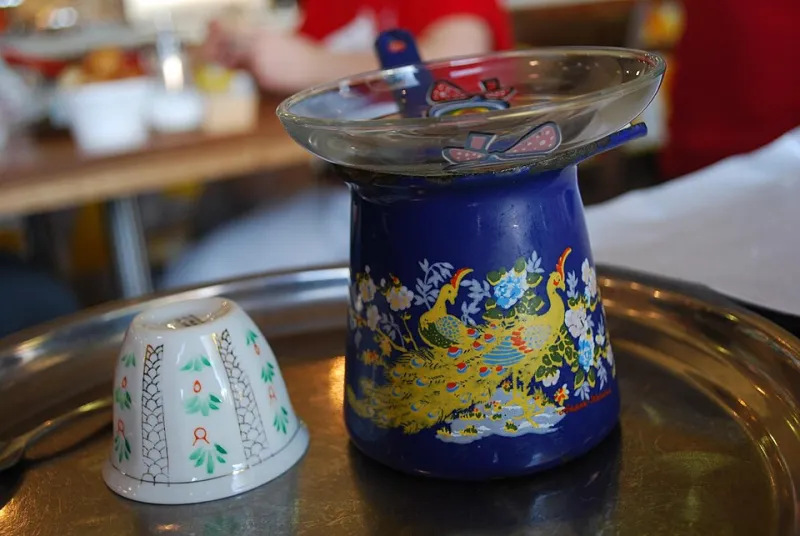
Photo: Alpha, CC BY-SA 2.0, via Wikimedia Commons
If you've ever sat down in a Lebanese home and been handed a small, handle-less cup of something warm and fragrant before anyone even asked what you wanted, you've already experienced one of the culture's most fundamental gestures. You didn't have to ask for it. It wasn't a question. It arrived because you arrived, and that's how it works.
Lebanese coffee — called qahwa — is one of the most quietly expressive things about the culture. And once you start paying attention to it, you start understanding a lot more about the food, the hospitality, and the values that shape the Lebanese table.
What Is Lebanese Coffee, Exactly?
Let's clear up a common point of confusion first. Lebanese coffee is not the same as what most Americans picture when they hear "Turkish coffee," though the two are closely related. Both are made from very finely ground beans brewed in a small long-handled pot called a rakweh (or cezve in Turkish). Both are served unfiltered, which means the grounds settle at the bottom of the cup — you sip carefully and stop before you reach the sediment.
What sets Lebanese qahwa apart is the spicing. Cardamom is the defining flavor, added directly to the grounds before brewing. The result is aromatic in a way that's almost perfume-like — earthy, slightly floral, with a warmth that hits differently than a straight espresso. In some regions of Lebanon and among certain families, a pinch of mastic (a resin with a faintly piney, herbal note) also makes its way into the pot. Others add a hint of rose water. Every household has its own version.
The coffee itself is typically made with medium-roast beans, which gives qahwa a gentler, less bitter profile than the dark roasts Americans often associate with strong coffee. It's meant to be sipped slowly, not gulped.
The Ritual Matters as Much as the Drink
Here's where things get interesting for anyone trying to understand Lebanese food culture more broadly: the way coffee is served tells you almost everything you need to know about how Lebanese hospitality operates.
When a guest arrives at a Lebanese home, coffee comes first. Before the food, before the conversation really gets going, before anything else. It's not a transaction ("would you like something to drink?") — it's a statement. You are welcome here. I'm glad you came. Sit down.
The cups are small, usually two to three ounces, which means the act of drinking is brief but the gesture is significant. Refills are offered immediately. Refusing a second cup is perfectly fine; there's no pressure. But accepting it signals that you're comfortable, that you're staying awhile.
"In my family, you knew someone really liked you if they made a fresh pot specifically for you," says Maya Frem, who grew up in Jounieh and now lives in San Diego. "My teta would bring out the rakweh like it was a ceremony. She'd make it in front of you so you could smell it. That was the whole point."
This idea — that the making of food and drink is part of the gift, not just the end product — runs through Lebanese culinary culture at every level. It's why bread is torn and shared rather than pre-sliced. It's why mezze is laid out generously, with more than anyone could possibly eat. The abundance isn't waste; it's expression.
Cardamom as a Flavor Key
For American home cooks who want to deepen their understanding of Lebanese cuisine, cardamom is one of the most important flavor relationships to develop. And Lebanese coffee is the best possible introduction.
Cardamom shows up throughout the cuisine — in seven spice blends, in rice dishes, in sweets like mamoul cookies and halva. Its flavor is complex: slightly citrusy, warm, with a cooling menthol quality that makes it feel both exotic and somehow familiar. Tasting it in coffee first, where it's the dominant note, helps you recognize it later when it's playing a supporting role in a savory lamb stew or a rice pilaf.
This is one of the reasons food-curious Americans who start exploring Lebanese cuisine through its beverages often find the rest of the food clicks into place faster. The flavor vocabulary overlaps in meaningful ways.
Making Lebanese Coffee at Home
The good news: you don't need special equipment to get started. A rakweh (small brass or stainless brewing pot) is ideal and easy to find online or at any Middle Eastern grocery store, but a small saucepan works in a pinch for your first attempt.
What you'll need:
- Finely ground coffee (look for pre-ground "Turkish coffee" style, or grind your own to an ultra-fine consistency)
- Ground cardamom (freshly ground from pods is significantly better than pre-ground)
- Water
- Sugar, if desired (added during brewing, not after)
The method:
Combine cold water, coffee, and cardamom in your rakweh — a rough ratio is one heaping teaspoon of coffee and a quarter teaspoon of cardamom per small cup of water. Add sugar now if you want it. Place over medium-low heat and stir to combine.
Watch it carefully. As the coffee heats, a dark foam will begin to rise. This foam — the wajh, or "face" — is considered the best part by many Lebanese coffee drinkers. Just before it boils over, remove the pot from heat, let it settle for a moment, then return it to the heat once more. Some people do this two or three times to build the foam.
Pour slowly into small cups, trying to distribute the foam evenly. Let the grounds settle for a minute before sipping.
Bringing the Ritual Into Your Home
You don't have to overhaul your morning routine to experience what Lebanese coffee culture is really about. The shift is more attitudinal than procedural.
Try making a pot the next time a friend comes over, before you offer anything else. Bring it out on a small tray. Sit down together. Don't rush it.
That's it. That's the ritual.
Lebanese food has always been about more than what's on the plate — it's about the intention behind the cooking, the care in the serving, and the warmth in the room. Coffee just happens to be where that philosophy is most concentrated, distilled down to a two-ounce cup that says everything without saying a word.