How Lebanese Dining Customs Are Quietly Rewriting the American Dinner Playbook
Not too long ago, the quintessential American dinner party looked pretty predictable: a protein at the center of the plate, sides arranged neatly around it, everyone done eating within forty-five minutes, and dessert served as a polite signal that the night was wrapping up. Efficient. Organized. A little lonely, if we're being honest.
Something has been shifting, though. Slowly, and without much fanfare, Lebanese dining culture has been working its way into American homes — not through trend pieces or viral recipes alone, but through actual lived experience. Through Lebanese-American neighbors who invite you over and somehow you end up still talking at midnight. Through restaurants where the table fills with small plates before you've even decided what you want. Through a growing sense, among a lot of American hosts, that the old dinner party formula just isn't cutting it anymore.
The Communal Table as a Cultural Statement
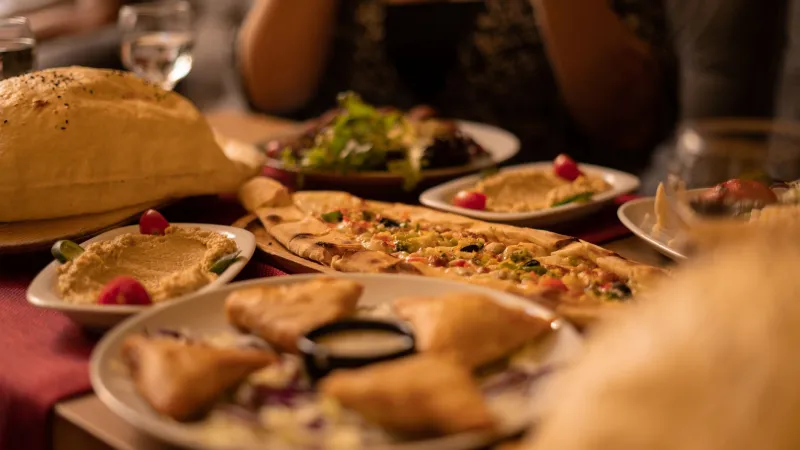
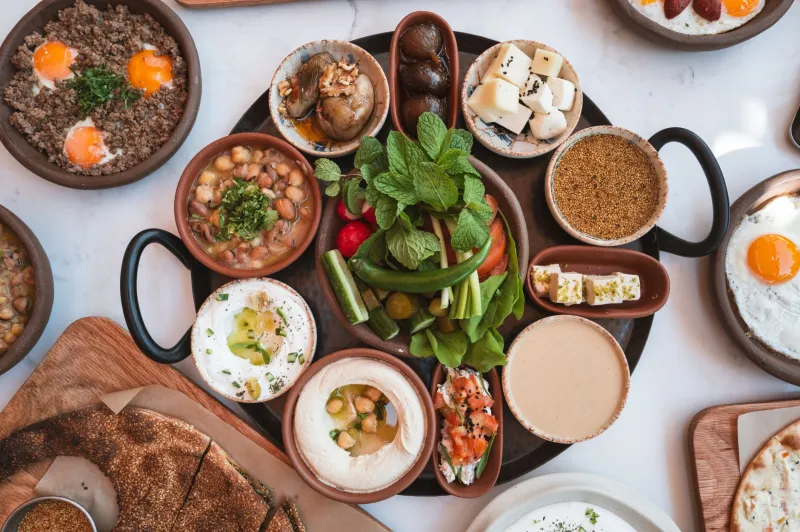
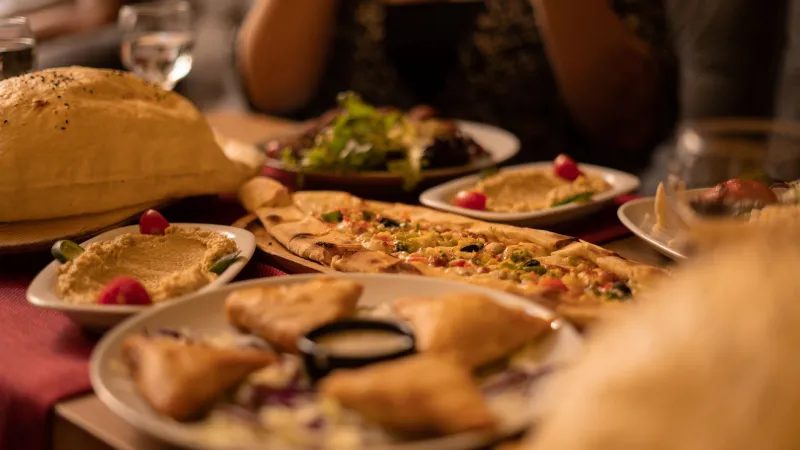
In traditional Lebanese dining, there's no single hero dish. The table is the hero. Mezze — that sprawling, generous spread of shared plates — means that eating is inherently collaborative from the first moment. You reach across. You pass things. You try something because your friend insists you absolutely have to.
Food writer and Lebanese-American essayist Maya Khalil, who grew up in Dearborn, Michigan, puts it plainly: "In my family, putting food in the center of the table wasn't a style choice. It was a philosophy. It said, what's mine is yours, and we figure out the meal together."
That philosophy is catching on in a big way. Across the country, hosts who have zero Lebanese heritage are building their dinner parties around shared plates. Pinterest boards are full of "mezze-style spreads." Charcuterie boards — already a giant cultural moment — are evolving into something closer to Lebanese mezze than their European origins, loaded with hummus, stuffed grape leaves, olives, and warm pita alongside the cheese.
This isn't cultural appropriation so much as cultural osmosis. People are encountering Lebanese food, loving how it feels to eat that way, and bringing those habits home.
Lingering Is the Point
One of the most radical things about Lebanese dining culture, from an American perspective, is the expectation that you stay. You don't eat and immediately pivot to the living room. The table is the living room. The meal stretches. Coffee comes, then maybe something sweet, then more coffee, then more conversation. Hours pass.
Sociologist Dr. Rena Farouk, who studies food and community at a university in the Pacific Northwest, has been tracking what she calls "extended table culture" in American social settings. Her observation: "There's a real hunger for permission to just sit. Americans are so conditioned to be productive, to move on to the next thing. Lebanese dining culture offers a counter-narrative — that staying at the table is the thing. That's the activity."
She's noticed this showing up in unexpected places. Dinner parties that used to wrap by nine are now going until eleven or midnight. Hosts are deliberately setting up their dining spaces to encourage lingering — better lighting, more comfortable chairs, a cheese plate that appears two hours into the evening to extend the night naturally.
"People don't always know they're borrowing from Lebanese culture specifically," Dr. Farouk says, "but when you trace the thread, that's often where it leads."
The Death of the Formal Place Setting (And Good Riddance)
Here's another quiet revolution: American entertaining has been steadily loosening up, and Lebanese dining culture is a big part of why.
The formal place setting — the one with four forks and a bread plate in the exact right spot — was always more about performance than hospitality. Lebanese dining doesn't really do performance. It does abundance and warmth. Plates overlap. Bread gets torn, not sliced. Someone always grabs the serving spoon before the host is ready, and that's fine, because the whole point is that everyone feels at home.
Jamil Haddad, a Lebanese-American restaurateur in Chicago, has watched this dynamic play out in his dining room for years. "When people come in and see the table covered in small dishes, they relax. There's no wrong move. You can't mess up a meal that's designed to be shared." He's noticed that his non-Lebanese customers often comment on how different the experience feels — less like being served, more like being welcomed.
That distinction matters. Being served implies a transaction. Being welcomed implies belonging. And belonging, it turns out, is exactly what a lot of Americans are looking for at the dinner table right now.
The Bread-Breaking Moment
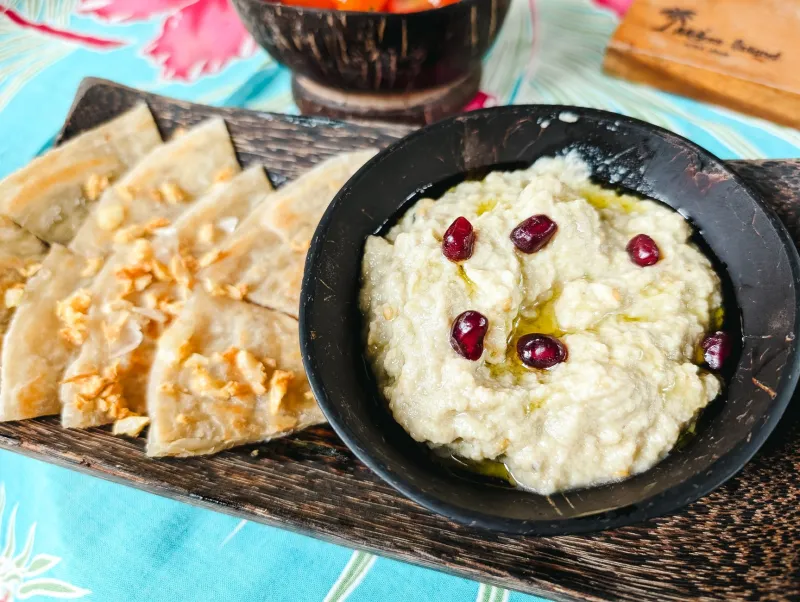
In Lebanese culture, breaking bread together is not a metaphor — it's a literal, daily act. Pita arrives warm. You tear it. You use it to scoop hummus or labneh or moutabal. Your hands are involved. The meal is tactile and immediate in a way that a fork-and-knife dinner simply isn't.
Food anthropologists have long noted that shared, hands-on eating creates faster social bonds. When you're eating with your hands — or at least tearing bread together — the formality dissolves. You stop performing and start connecting.
American hosts who've picked up this habit talk about it as a kind of social unlock. "The second I put warm bread on the table and a big bowl of hummus, the whole energy changes," says Rachel Torres, a home cook in Austin who started hosting Lebanese-inspired dinners after a trip to a local Lebanese restaurant changed her perspective on entertaining. "People stop sitting up straight. They start talking. It's like the bread gives everyone permission to just be themselves."
What This Means for How We Host
The broader cultural shift here isn't just about food — it's about what we think a dinner party is for. The old American model prioritized impression: a beautiful table, a technically impressive meal, a tidy timeline. The Lebanese model prioritizes connection: enough food that no one worries, a pace that allows real conversation, and a genuine reluctance to let the night end.
These values aren't in conflict with American hospitality — they're an upgrade to it. And the fact that they're spreading, organically, through Lebanese-American communities and restaurants and dinner parties, says something important about what people are actually hungry for.
It's not just the food. It's the feeling. The sense that the table is a place you're wanted, that there's more coming, that no one is watching the clock.
Lebanon has known this for centuries. America is finally catching on.
Bring It to Your Own Table
You don't need to overhaul your entire hosting style to borrow from this tradition. Start small:
- Lead with shared plates. Even if you're making a main dish, put out a few small bites first — olives, hummus, warm bread. Let people graze while they settle in.
- Slow the pace deliberately. Don't rush to clear plates. Let the table breathe between courses.
- Make it hands-on. Tear bread. Pass dishes. Let people serve themselves and each other.
- Plan for lingering. Have a second wind ready — a small dessert, a pot of coffee, something that signals the night isn't over yet.
The Lebanese dinner table isn't a formula. It's an attitude. And once you catch it, it's hard to go back to the old way of doing things.