Staying at the Table: How Lebanese Dining Rituals Are Quietly Curing American Loneliness
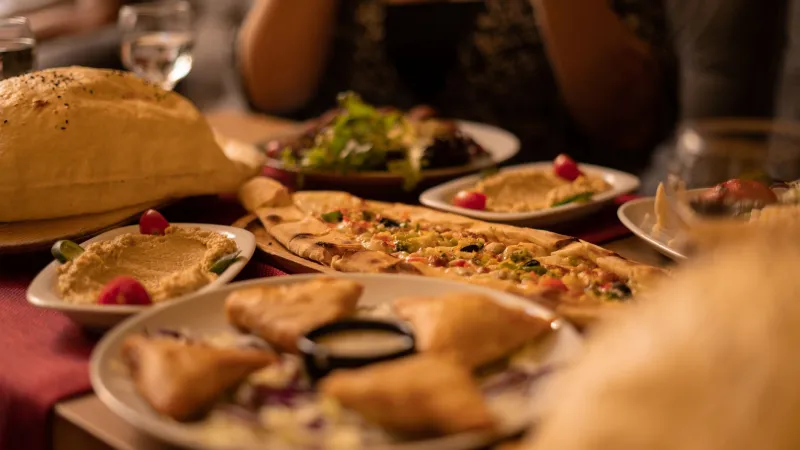
Somewhere between the third plate of hummus and the second pot of tea, something shifts. The conversation that started with how was your week has wandered into childhood memories, half-remembered jokes, and plans that didn't exist an hour ago. Nobody has checked their phone in forty minutes. Nobody is in a hurry to leave.
This is a Lebanese dinner table. And honestly? America could use a lot more of them.
The Loneliness Numbers Are Hard to Ignore
In 2023, the U.S. Surgeon General issued an advisory that made headlines for all the wrong reasons: loneliness had become a full-blown public health crisis. More than half of American adults reported measurable levels of loneliness. Social isolation, the advisory noted, carries health risks comparable to smoking fifteen cigarettes a day. Young adults, seniors, and parents of young children were among the hardest hit.
We live in a country with more ways to connect than any generation in history, yet people are eating dinner alone in front of laptops, texting instead of calling, and going entire weekends without a real conversation that lasts more than five minutes.
Food anthropologists and social researchers have been circling this problem for years. And increasingly, the data points toward something deceptively simple: we've lost the ritual of eating together, and we're paying for it.
What Lebanese Culture Gets Right About the Table
In Lebanon, and in Lebanese-American households across the country, dinner isn't just a meal. It's an event. A production. An occasion that nobody rushes.
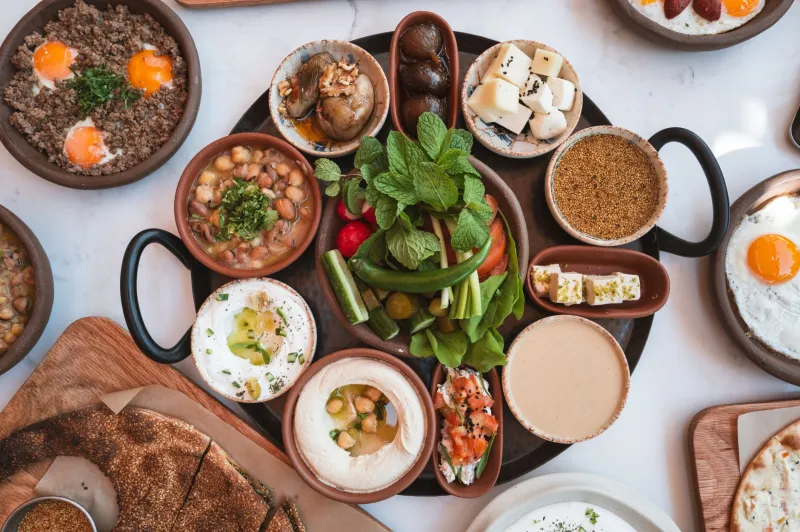
The table fills slowly — a bowl of olives here, a plate of warm pita there, then the parade of small dishes that makes up a proper mezze spread. People arrive, they settle in, and they stay. Conversations overlap. Someone tells a story that reminds someone else of a story. The food keeps coming because that's how you signal that everyone is welcome to remain exactly where they are.
This isn't accidental. Lebanese hospitality culture — rooted in centuries of tradition and shaped by the concept of diyafa, the sacred duty of generosity toward guests — treats the table as a space for human connection first and sustenance second. The food is the vehicle. The togetherness is the destination.
"In Lebanese homes, you don't eat and leave," says one Lebanese-American home cook in Detroit. "My mother would be genuinely offended if you stood up before the tea was finished. Staying at the table is the meal."
What the Research Says About Lingering
Turns out, Mama was onto something the scientists are just catching up to.
Studies on social bonding consistently show that shared meals — particularly long, unhurried ones — are among the most effective mechanisms humans have for building and maintaining close relationships. Oxford University professor Robin Dunbar, who has spent decades studying human social behavior, has found that eating together activates the same neurochemical pathways as physical touch and laughter, flooding the brain with endorphins that reinforce feelings of trust and belonging.
Longer meals amplify this effect. The more time people spend at a table together, the deeper the conversational territory they tend to cover, and the stronger the sense of connection they report afterward. It's not just about the food. It's about what happens when you stop being in a hurry.
Contrast that with the average American dinner, which research suggests lasts under twenty minutes and frequently happens in front of a screen. We're technically eating, but we're not dining. We're fueling, not connecting.
The Mezze Model as a Social Architecture
Here's one reason Lebanese-style eating is so naturally conducive to lingering: the food itself demands it.
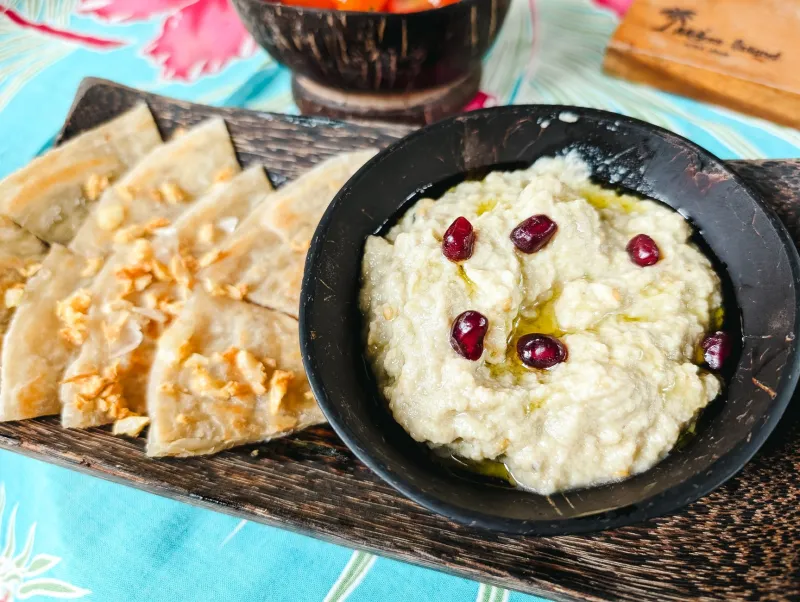
A mezze spread isn't designed to be consumed in a single focused sweep. It's designed to be picked at, shared, revisited, debated. Do you want more of the baba ghanoush? Try this with the warm bread. Wait until you taste the fattoush — someone just added the pomegranate molasses. The food keeps the conversation going because there's always something new on the table to react to.
This is, in food anthropology terms, a genius piece of social architecture. The meal structure actively discourages the kind of isolated, transactional eating that dominates American dining culture. You can't really do Lebanese mezze alone. It doesn't make sense alone. It's built for a crowd, and the crowd is built for each other.
For American households trying to rebuild some of that lost connection, adopting even a loosely mezze-inspired approach to dinner — more small dishes, more sharing, less plating everything individually — can shift the whole energy of the table.
What Happens When You Actually Try It
Ask anyone who's hosted or attended a genuine Lebanese dinner gathering and you'll hear a version of the same story. People arrived planning to stay for an hour. They left three hours later. They can't quite explain what happened in between, except that they talked more honestly, laughed more freely, and felt genuinely better than they had in weeks.
That's not magic. That's what sustained, screen-free, food-anchored human connection does to a person. Lebanese culture has been engineering that outcome for generations. The rest of us are just starting to understand what we've been missing.
You don't need to overhaul your entire life. You don't need to cook for twelve people or spend all day in the kitchen. You need a table, some people you care about, a few good things to eat, and the genuine decision to stay a little longer than feels strictly necessary.
Put out the labneh. Warm the bread. Pour another glass. The dishes can wait.
A Few Ways to Bring It Home
If you want to start building more of this into your own life, here are a few small, practical shifts:
Commit to at least one phone-free dinner a week. Even with just your household. The difference is immediate and a little startling.
Cook more dishes, not bigger ones. A mezze spread of five or six small plates keeps people engaged and grazing longer than one large entrée that disappears in ten minutes.
Start with something to pick at. Olives, flatbread, a dip — something on the table before everyone sits down signals that this is a relaxed space, not a scheduled event.
Invite people for dinner, not for a specific time slot. Lebanese hospitality doesn't come with an end time built in. That open-endedness changes how people show up.
Make tea or coffee part of the meal. In Lebanese culture, the tea at the end of dinner isn't a signal that the evening is wrapping up. It's the invitation to keep going. Lean into that.
The Lebanese dinner table has always known something the rest of us are relearning: that the act of sitting down together, unhurried and genuinely present, is one of the most powerful things human beings can do for each other. In a country aching for connection, that's not a small thing. That's everything.