From the Bekaa Valley to Your Table: A Beginner's Guide to Lebanese Wine and Arak
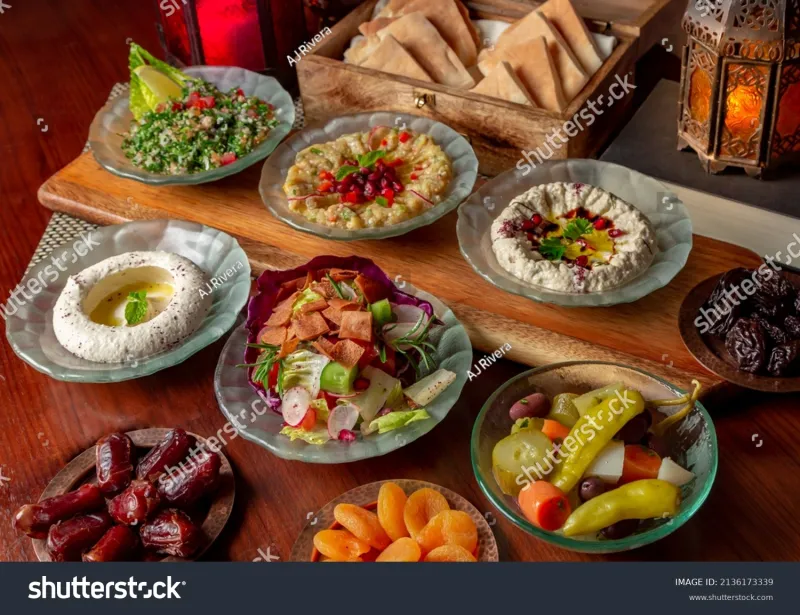
Photo: lebanese mezze table with wine glasses and arak bottles, via www.shutterstock.com
You've built the mezze board. The labneh has its olive oil pool, the pita is warm, the table is crowded — now what do you pour?
Lebanon's answer is one of the world's oldest, and honestly, one of its most underrated. Winemaking in the Bekaa Valley predates the Roman Empire by millennia, and the country's boutique wineries have quietly become cult favorites among sommeliers. Here's your no-stress guide to drinking Lebanese at your next gathering.
Why Mezze and Wine Were Made for Each Other
Mezze is a spread of small, bright, garlicky, lemony dishes — and that's exactly what wine loves. The acidity in Lebanese whites (and in the cuisine itself) acts like a palate reset between bites. The rule of thumb: match bright with bright, and let a smoky red handle the grilled stuff.
- Creamy dishes (hummus, labneh, muhammara) → crisp, high-acid whites
- Herby salads (tabbouleh, fattoush) → aromatic whites with citrus notes
- Grilled meats and kibbeh → spicy, medium-bodied reds
Five Lebanese Bottles to Look For in the US
Under $20: Massaya 'Classic' Bekaa Valley — A juicy red blend of cinsault, grenache, and syrah with real peppery character. Widely imported and a crowd-pleaser with grilled kofta.
Under $20: Ksara 'Blanc de Blancs' — Lebanon's oldest winery makes a fresh, floral white that's practically designed for hummus and fried halloumi.
$20–35: Château Musar 'Jeune' — The approachable little sibling of Lebanon's most famous estate. Funky in the best way, with dark fruit and a wild edge. Serve it slightly cool.
$25–40: Ixsir 'Grande Réserve' — A polished red from hills above Tripoli; velvety enough for date night, structured enough for lamb.
Splurge: Château Musar Red — The legend. Cabernet-heavy, brooding, unlike anything else. Open it an hour early and let the table talk about it.
Find these at better wine shops, Total Wine, or ask your local retailer to special order — most US importers carry at least one Lebanese label.
Arak: The Ritual You Should Know
Arak is Lebanon's national spirit — a grape brandy distilled with anise, cousin to Turkish raki and Greek ouzo. But the serving ritual is what makes it Lebanese.
First, you pour a finger of arak into a small glass. Then you add cold water — and watch it turn cloudy white, which is part of the show. Finally, add an ice cube. Sip it slowly alongside mezze, the way it's been done for generations. Never drink it neat, and never rush it.
What to buy: Look for Arak Touma or Arak Brun in Lebanese or Middle Eastern markets. Expect $20–35 a bottle; a little goes a long way.
Not Drinking? The Table Doesn't Shrink
Here's what we love most about the Lebanese table: nobody's left with an empty glass. Two stars:
Jellab — A deep, grape-molasses drink studded with pine nuts and golden raisins. Find the syrup at Middle Eastern grocers, mix with cold water and ice, and float the nuts on top. It tastes like a raisin-sweet summer evening.
Mint lemonade (laymoon bi na'na) — Blend fresh lemon juice, sugar, water, and a serious handful of mint leaves until frothy. It's tart, icy, and shows up at every Lebanese summer table.
Both pair beautifully with everything on the board — the acidity does the same palate-cleaning work as wine.
The Real Pairing Rule
Ask any Lebanese host and they'll tell you: the best pairing is the one that keeps people at the table. Pour something bright, refill glasses often, and let the mezze do its slow, joyful work. Sahtein — to your health, twice over.