Your Brain on Hummus: The Real Science Behind Why Lebanese Food Lifts Your Mood
You know that feeling after a really good Lebanese meal? The one where you're full but not heavy, happy but not hyper, and somehow everything just feels a little more okay than it did an hour ago? You've probably chalked it up to good company or the comfort of warm bread. But here's the thing: your brain is doing a lot of quiet, fascinating work behind the scenes — and the ingredients on that table are directly responsible.
We dug into the nutritional science, talked to registered dietitians and a couple of researchers who study the gut-brain connection, and came away genuinely surprised by how much Lebanese pantry staples do for your neurochemistry. This isn't wellness fluff. This is actual biochemistry, and it starts with a bowl of hummus.
Tahini Is Basically a Mood Supplement in Disguise
Let's start with tahini — ground sesame paste — because it might be the most underrated ingredient in the American kitchen. A single two-tablespoon serving contains meaningful amounts of tryptophan, the amino acid your body converts into serotonin. Serotonin is the neurotransmitter most associated with feelings of calm, contentment, and emotional stability. When levels dip, anxiety and low mood tend to follow.
"Most Americans are familiar with tryptophan from Thanksgiving turkey conversations, but sesame seeds are actually a very concentrated source," says one registered dietitian who specializes in Mediterranean eating patterns. "When you combine tahini with the complex carbohydrates in chickpeas — like in hummus — you're creating an ideal delivery mechanism. The carbs help tryptophan cross the blood-brain barrier more efficiently."
So hummus isn't just a dip. It's a serotonin delivery system with really good flavor. Lebanese grandmothers have known this for generations; they just didn't have the vocabulary for it.
Tahini also brings along magnesium, a mineral that plays a direct role in regulating the nervous system. Low magnesium is increasingly linked to symptoms of depression and anxiety in clinical research. Getting it from food — rather than a supplement bottle — means your body absorbs it alongside other synergistic compounds that make it more bioavailable.
What Pomegranate Does to Your Dopamine Pathways
Pomegranate molasses is one of those ingredients that home cooks outside the Lebanese community often overlook, but it shows up constantly in the cuisine — in dressings, marinades, dips like muhammara, and even some meat dishes. And it turns out the deep, jewel-toned fruit it comes from is doing serious neurological work.
Pomegranates are extraordinarily high in punicalagins and anthocyanins — polyphenol compounds with potent antioxidant and anti-inflammatory properties. Chronic low-grade inflammation in the brain is now widely recognized as a contributing factor to depression and cognitive decline. By reducing that inflammation, these compounds help maintain the environment your dopamine and serotonin systems need to function properly.
But there's more. Some research suggests that pomegranate extract may actually stimulate the production of brain-derived neurotrophic factor (BDNF) — sometimes called "Miracle-Gro for the brain." BDNF supports the growth and maintenance of neurons and is closely associated with mood regulation and resilience to stress. "It's early research, but the signal is consistent enough to be exciting," one nutritional neuroscientist noted when we asked about the pomegranate-brain connection.
Eating Lebanese food regularly means you're getting these compounds through delicious, whole-food sources — not a pill.
Olive Oil: The Fat Your Brain Actually Wants
Lebanon's cuisine runs on olive oil. It's drizzled over everything from labneh to fatteh, used generously in cooking, and treated less like a condiment and more like a foundational ingredient. That's excellent news for your brain, which is roughly 60% fat and deeply dependent on the quality of dietary fats you consume.
Extra-virgin olive oil is rich in oleocanthal, a compound that functions similarly to ibuprofen in terms of its anti-inflammatory action — but with none of the side effects when consumed as food. It's also loaded with oleic acid, a monounsaturated fat that supports the integrity of neural cell membranes. Healthy cell membranes mean better communication between neurons, which translates to sharper cognition and more stable mood.
The polyphenols in high-quality EVOO have also been shown to reduce oxidative stress in brain tissue — essentially slowing down the cellular wear and tear that accumulates over time. "When we look at populations with lower rates of depression and cognitive decline, olive oil consumption keeps showing up as a common denominator," says one researcher who studies dietary patterns in Mediterranean communities.
At Happy Bites LB, we're always telling people: don't skimp on the olive oil. Turns out that's advice your neurons would second.
Za'atar and Mint: The Herbs That Calm Your Nervous System
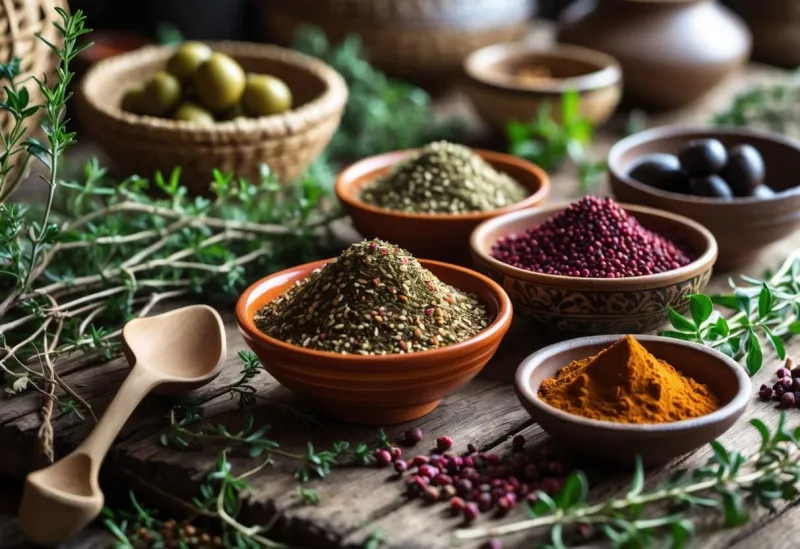
If you've spent any time around Lebanese food, you've encountered za'atar — the earthy, herby, slightly tangy spice blend made from dried thyme, sumac, sesame seeds, and salt. It's eaten at breakfast, sprinkled over flatbread, mixed into olive oil for dipping, and used as a rub on everything from chicken to roasted vegetables.
Thyme, the primary herb in most za'atar blends, contains rosmarinic acid and luteolin — compounds that have demonstrated anxiolytic (anti-anxiety) effects in research settings. Luteolin in particular has been shown to inhibit the release of inflammatory cytokines in the brain, which are increasingly implicated in anxiety disorders.
Mint — fresh, dried, or steeped into tea — is equally interesting. Beyond its well-known digestive benefits (a calm gut is a calm brain, given the gut-brain axis), mint contains menthol and rosmarinic acid as well, both of which have mild sedative and mood-stabilizing properties. The act of drinking Lebanese mint tea after a meal isn't just cultural ritual; it's a genuinely effective way to signal your nervous system to downshift.
"There's something to be said for the cumulative effect of eating these herbs regularly, as part of a whole dietary pattern rather than in isolation," one dietitian pointed out. "Lebanese cuisine isn't doing one thing right. It's doing dozens of things right, simultaneously."
The Whole Is Greater Than the Sum of Its Parts
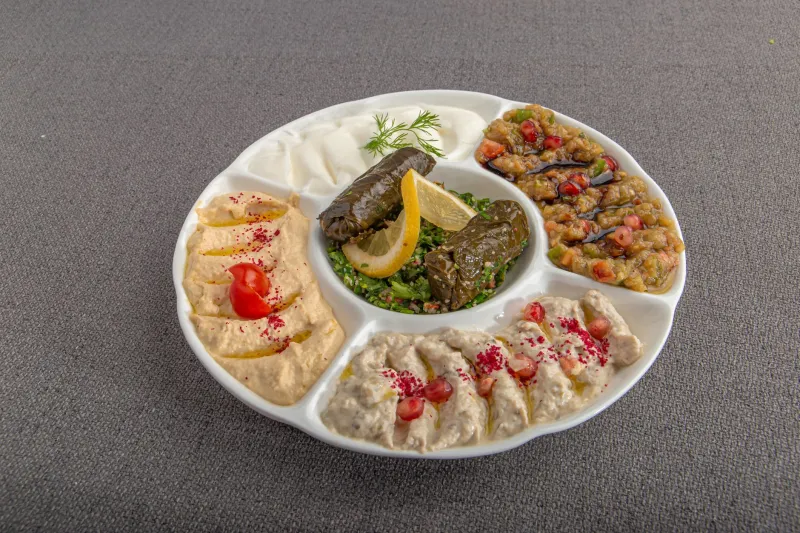
Here's what makes Lebanese food neurochemically special: none of these ingredients works in isolation. A traditional Lebanese spread — hummus, tabbouleh, fattoush, grilled meat or fish, warm bread, a bowl of olives, fresh herbs, and a drizzle of olive oil over everything — is delivering tryptophan, magnesium, polyphenols, healthy fats, prebiotic fiber, and anti-inflammatory compounds all at once, in a meal designed to be eaten slowly and shared with people you care about.
The social dimension matters too. Shared meals increase oxytocin — the bonding hormone — which amplifies the mood benefits of everything on the table. Lebanese dining culture, with its emphasis on spreading dishes across the table and eating together rather than from individual plates, essentially turbocharges the neurochemical payoff.
So the next time someone tells you that Lebanese food just makes them happy, you can tell them they're not imagining it. The ingredients are quite literally triggering real, measurable joy in their brain — one bite of hummus at a time.
Now if you'll excuse us, we're going to go make a batch.