Move Over, Hot Sauce: Za'atar, Labneh, and Pomegranate Molasses Are Taking Over American Refrigerators
There's a quiet revolution happening in American kitchens, and it smells incredible. Somewhere between the sriracha and the ranch dressing, a new generation of home cooks is making room for something older, bolder, and honestly way more interesting. Lebanese pantry staples — specifically za'atar, labneh, and pomegranate molasses — are muscling their way into everyday cooking routines, and they're not just hanging out in specialty recipes. They're replacing the basics.
If you've ever drizzled pomegranate molasses over a salad and wondered why you ever bothered with balsamic, you already know what we're talking about.
Why Lebanese Condiments Hit Different
Here's the thing about conventional American condiments: most of them do one job. Ketchup is sweet and tangy. Mayo is creamy and rich. Hot sauce brings the heat. They're reliable, sure, but they're not exactly layered.
Lebanese pantry staples operate on a different frequency. They carry centuries of culinary tradition, built around the idea that food should be complex, communal, and genuinely joyful. Za'atar isn't just an herb blend — it's earthy, lemony, slightly nutty, and herbaceous all at once. Labneh isn't just strained yogurt — it's tangy, thick, and versatile in ways that cream cheese can only dream about. Pomegranate molasses isn't just sweet — it's tart and deep and almost wine-like, with a richness that makes everything it touches more interesting.
These aren't niche ingredients anymore, either. You can find them at Whole Foods, Trader Joe's, Middle Eastern grocery stores, and increasingly at regular supermarkets across the country. The barrier to entry has basically disappeared.
Za'atar: Your New Everything Seasoning
Let's start with za'atar, because once you bring it into your kitchen, you'll wonder how you ever got by without it.
Traditionally, za'atar is a blend of dried thyme (or wild oregano), sumac, sesame seeds, and salt. The exact ratio varies by family and region — this is Lebanese food, after all, where recipes are inherited, not measured — but the result is always that same punchy, herby, slightly citrusy combination that makes your brain do a little happy dance.
In Lebanon, za'atar gets mixed with olive oil and spread on flatbread for breakfast. In American kitchens, it's doing so much more.
Try it instead of: Italian seasoning, everything bagel seasoning, or plain dried herbs.
- Stir it into softened butter and slather it on corn before grilling.
- Mix it with olive oil and brush it over chicken thighs before roasting.
- Sprinkle it on avocado toast instead of red pepper flakes — the sumac adds a citrusy pop that plays beautifully with the richness of the avocado.
- Dust it over fried eggs with a drizzle of olive oil for a breakfast that feels like a full experience.
The sesame seeds add a subtle nuttiness that makes za'atar feel more substantial than a single dried herb ever could. It's the kind of seasoning that makes people ask, "Wait, what did you put on this?" and then immediately want the recipe.
Labneh: The Creamy Swap You Didn't Know You Needed
Labneh is strained yogurt — but calling it that feels like calling a great novel "some words on paper." When yogurt gets hung in cheesecloth and drained for several hours (or overnight), it transforms into something thick, spreadable, and intensely tangy. Think Greek yogurt's more sophisticated older sibling.
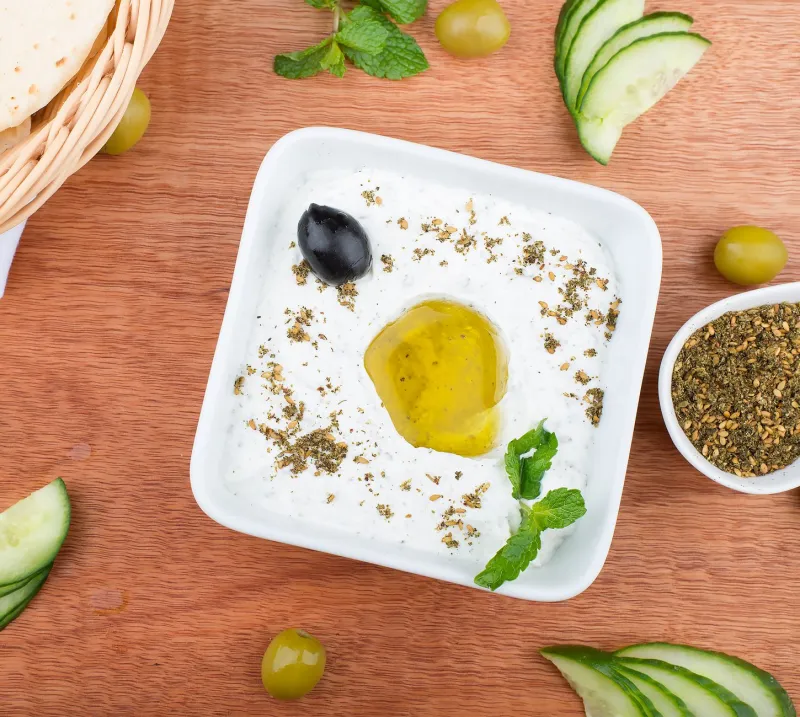
In Lebanese households, labneh shows up at almost every meal. It gets rolled into balls and preserved in olive oil, spread thick on a plate with herbs and olives, or dolloped next to vegetables and flatbread. It is, in many ways, the ultimate Lebanese condiment.
Try it instead of: Cream cheese, sour cream, mayo-based dips, or Greek yogurt in savory applications.
- Spread it on a bagel with cucumber, za'atar, and a drizzle of olive oil. It's better than cream cheese. Full stop.
- Use it as the base for a vegetable dip at your next get-together — mix in some garlic and lemon and watch it disappear.
- Dollop it onto roasted beets or sweet potatoes the way you'd use sour cream on a baked potato.
- Thin it out with a little water and use it as a creamy salad dressing with lemon and herbs.
Labneh also has a practical advantage: because it's lower in fat than cream cheese and higher in protein than regular yogurt, it tends to sit a little lighter. Your guests will eat twice as much without feeling weighed down — which, honestly, is the whole point of Lebanese hospitality.
Pomegranate Molasses: The Secret Weapon Your Pantry Is Missing
If za'atar is the everyday hero and labneh is the creamy anchor, pomegranate molasses is the secret weapon — the ingredient that makes food writers type things like "bright" and "complex" and "I don't know what I just ate but I need more of it."
Made by reducing pomegranate juice down to a thick, syrupy concentrate, pomegranate molasses is simultaneously sweet, tart, and slightly bitter. It's used throughout Lebanese and broader Middle Eastern cooking in everything from fattoush dressing to marinades to dessert glazes. And it is shockingly good in contexts you'd never expect.
Try it instead of: Balsamic glaze, teriyaki sauce, or cranberry sauce.
- Whisk it into a vinaigrette with olive oil, mustard, and a pinch of salt. It's more interesting than balsamic and works beautifully on bitter greens.
- Brush it over salmon or chicken during the last few minutes of roasting for a glossy, caramelized finish.
- Drizzle it over vanilla ice cream or Greek yogurt with crushed pistachios for a dessert that takes about 45 seconds to assemble and tastes wildly impressive.
- Stir a teaspoon into your cranberry sauce at Thanksgiving and watch people try to figure out why it tastes so much better this year.
The tartness in pomegranate molasses comes from the fruit's natural acidity, which means it does the same job as vinegar or citrus in a lot of recipes — cutting through richness and adding brightness — but with way more depth.
Building Your Lebanese Condiment Kit
The good news is that stocking up on all three of these doesn't require a specialty store pilgrimage. Most major grocery chains carry at least one or two of them, and brands like Al Wadi, Cortas, and Ziyad are widely available online if your local store hasn't caught up yet.
Start with one. Pick whichever sounds most interesting and spend a week cooking with it. Mix za'atar into your morning eggs. Swap labneh for cream cheese on your weekend bagel. Add a drizzle of pomegranate molasses to your next roasted veggie sheet pan. Pay attention to how your cooking changes.
Then add the next one.
The Lebanese approach to food has always been about building layers of flavor, sharing generously, and finding joy in the act of eating together. These three condiments carry all of that in a jar. Once they're in your kitchen, the only question is why it took you this long to invite them in.